Vera Frank · 19 October 2026
Wind Record Analysis Reveals Influences on Sediment Transport and Marine Spawning Habitats in Open Coastal Regions
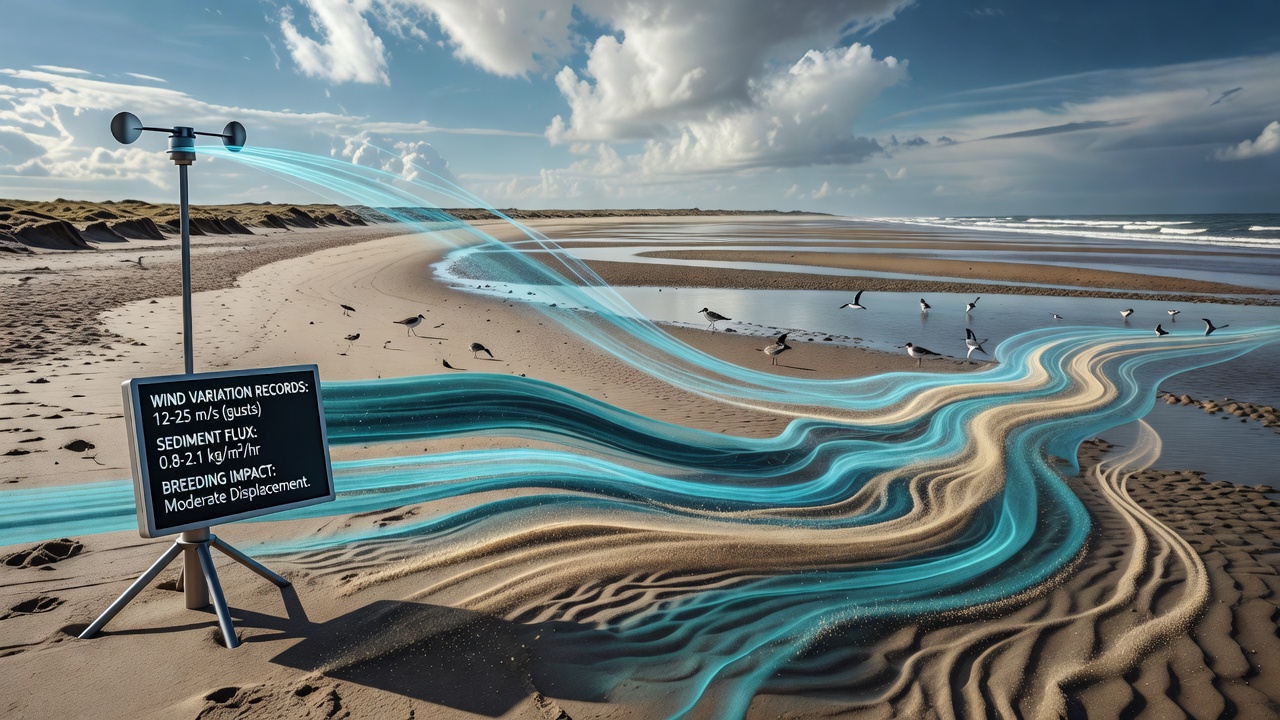
Wind variation records from coastal monitoring stations have documented patterns that connect atmospheric shifts to sediment movement and the condition of marine breeding grounds in exposed zones, and data compiled through October 2026 shows measurable changes in nearshore dynamics across multiple regions. Studies from government agencies and academic institutions track these interactions by combining anemometer readings with bathymetric surveys and biological sampling, which reveals how sustained differences in wind speed and direction alter wave energy that drives sand and silt relocation.
Tracking Wind Patterns Across Exposed Shores
Monitoring networks maintained by agencies such as the National Oceanic and Atmospheric Administration in the United States and the Commonwealth Scientific and Industrial Research Organisation in Australia have compiled multi-year datasets that capture fluctuations in wind velocity and prevailing directions, and these records indicate that seasonal anomalies lasting several weeks can intensify longshore currents responsible for sediment redistribution. Observers note that when wind patterns deviate from historical averages, the resulting changes in wave approach angles accelerate erosion in some areas while promoting deposition in others, which directly modifies the substrate composition of shallow coastal flats.
Researchers at institutions including the University of Cape Town have cross-referenced wind logs with sediment core samples collected from exposed headlands, and findings show that stronger cross-shore wind events correlate with increased offshore transport of fine particles that once stabilized breeding substrates. Data from these efforts demonstrate that wind-driven resuspension events occur more frequently during transitional seasons, when atmospheric pressure gradients steepen and produce gustier conditions along open coastlines.
Sediment Dynamics and Habitat Modification
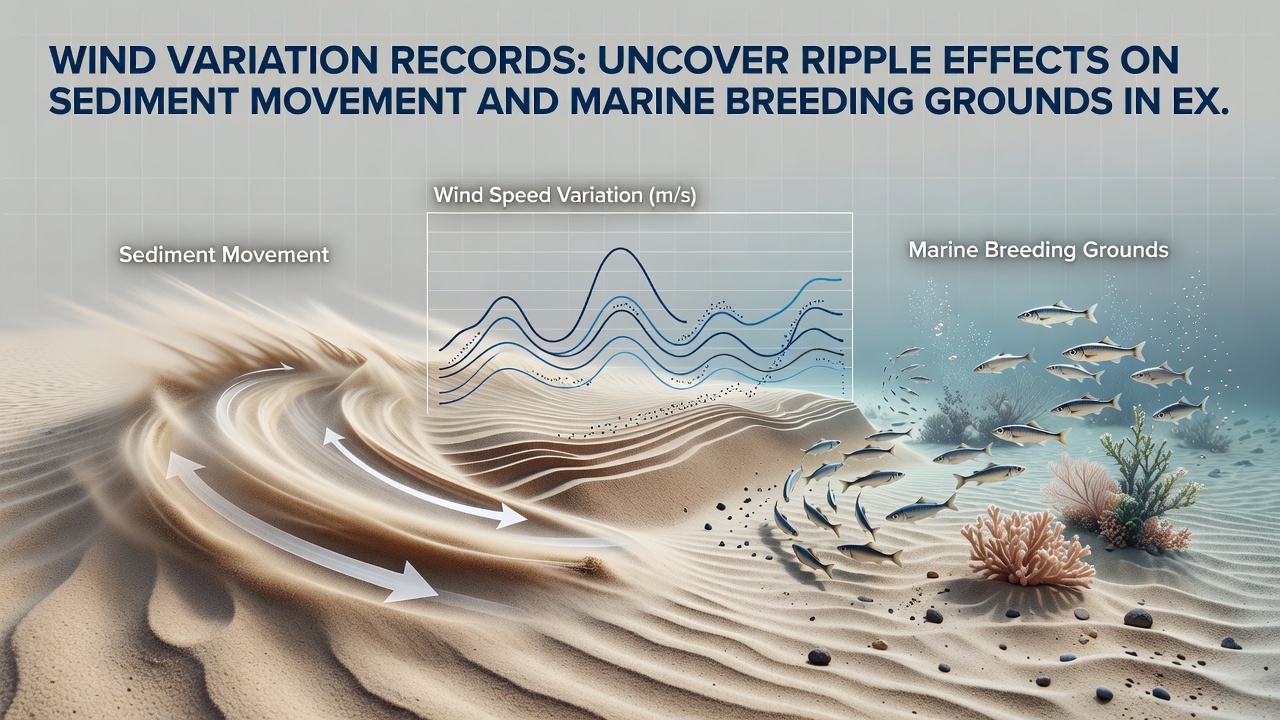
Sediment movement influenced by variable winds affects the physical structure of marine breeding grounds by shifting sandbars and altering grain size distributions that many species require for egg attachment or larval settlement. Field measurements taken at sites in the North Sea and along the western Australian shelf confirm that prolonged wind episodes shift sediment volumes on the order of thousands of cubic meters per kilometer of shoreline within a single month, and such volumes can bury or expose critical spawning beds depending on the direction of transport.
Coastal engineers and marine biologists working with the European Environment Agency have mapped these changes using acoustic Doppler current profilers paired with wind records, and results indicate that shifts in sediment supply influence the stability of seagrass meadows and gravel patches that serve as nursery areas for demersal fish. When wind variations reduce sediment input to certain flats, those areas experience increased exposure to wave scour that can lower survival rates for early life stages of several commercially important species.
Observed Effects on Marine Breeding Areas
Breeding ground assessments conducted in October 2026 across exposed sectors of the Pacific and Atlantic coasts show that wind-driven sediment changes coincide with measurable differences in egg density and larval retention. Surveys led by teams from Memorial University in Canada found that areas experiencing net sediment loss recorded lower counts of demersal eggs compared with adjacent zones where deposition maintained suitable grain sizes, and these patterns held after controlling for temperature and salinity variables.
Additional work by scientists affiliated with the Australian Institute of Marine Science links wind variability to altered connectivity between offshore spawning sites and nearshore settlement habitats, because changes in current strength and direction affect how far larvae travel before they require stable substrates. Records indicate that wind anomalies lasting beyond two weeks can displace sediment enough to fragment continuous breeding patches into isolated pockets, which reduces overall reproductive success for species that depend on contiguous habitat corridors.
Integrated Monitoring Approaches
Integrated programs now combine satellite-derived wind fields with in-situ sediment traps and underwater video transects to quantify these ripple effects at larger scales, and agencies such as Fisheries and Oceans Canada have adopted such methods to update habitat suitability models. The resulting datasets reveal that wind variation influences not only physical sediment budgets but also the chemical properties of pore water within breeding substrates, which in turn affects fertilization rates and embryonic development for several benthic organisms.
Long-term comparisons between wind records from the 1990s and those ending in October 2026 demonstrate an increase in the frequency of high-variability periods that accelerate sediment turnover, and this trend appears consistent across both temperate and subtropical exposed coasts. Researchers continue to refine predictive tools that incorporate these atmospheric inputs to forecast when and where breeding grounds may experience the most pronounced substrate alterations.
Conclusion
Wind variation records provide a growing body of evidence that atmospheric fluctuations propagate through wave and current systems to reshape sediment movement and the viability of marine breeding grounds in exposed coastal zones. Continued collection of coordinated physical and biological data will allow agencies and institutions to track these connections more precisely and support management decisions grounded in observed environmental linkages.